Protect your skin.
Protect our reef.
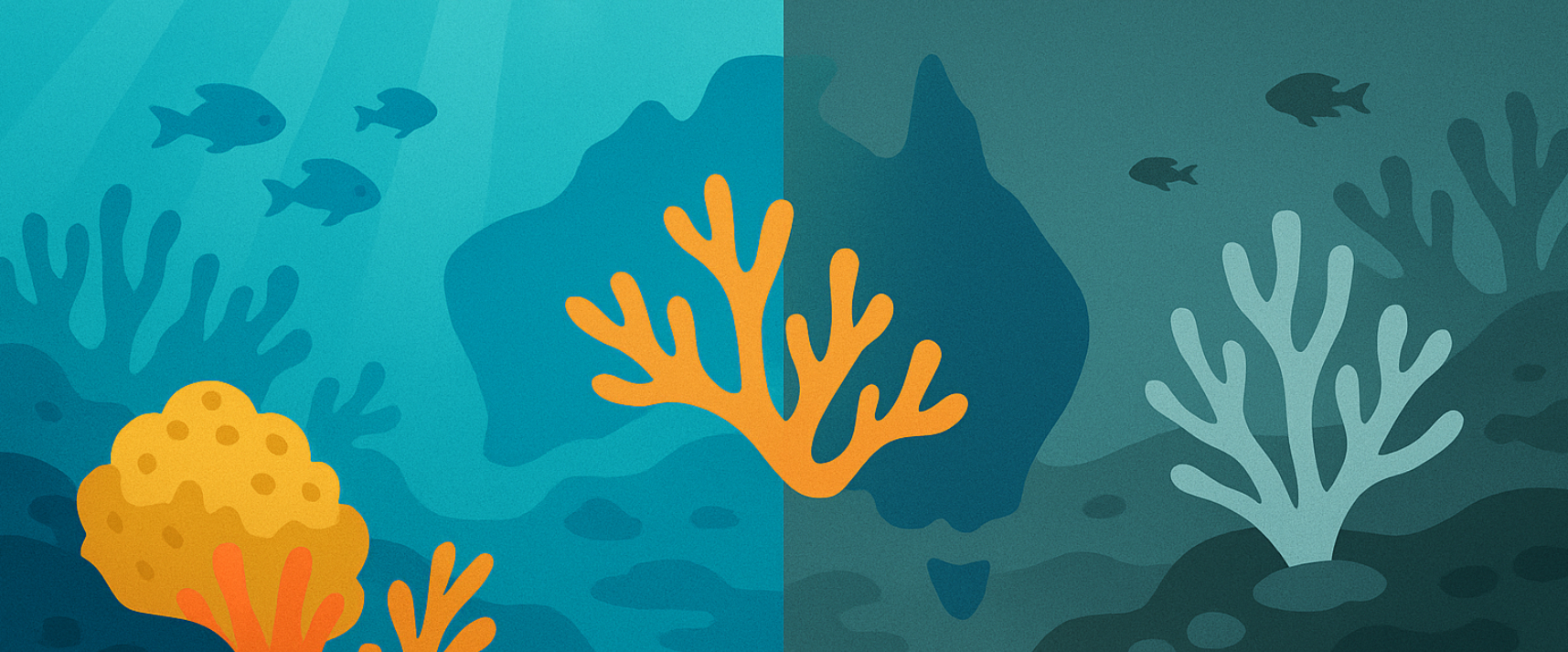
Every year, an estimated 14,000 tonnes of sunscreen wash into our oceans. Chemicals like oxybenzone and octinoxate cause coral bleaching, damage DNA, and threaten marine life across Australia's coastline.
Independent. Science-backed. For every Australian.
Reef Safety Australia is an independent, not-for-profit awareness platform. We don't sell sunscreen. We don't take sponsorship from sunscreen brands. Our only goal is to give you the facts — so you can make informed choices that protect both your skin and our marine ecosystems.
Most Australians don't know that sunscreen chemicals like oxybenzone and octinoxate cause coral bleaching, DNA damage, and reef death — even at incredibly low concentrations. And the damage doesn't only happen at the beach. Your daily shower sends these chemicals into wastewater systems that eventually reach our rivers and coastlines.
Australia is home to the Great Barrier Reef — the largest living structure on Earth. Yet unlike Hawaii and Palau, which have banned reef-toxic sunscreen chemicals, Australia has no restrictions and no regulated definition of "reef-safe." We believe that needs to change, and it starts with awareness.
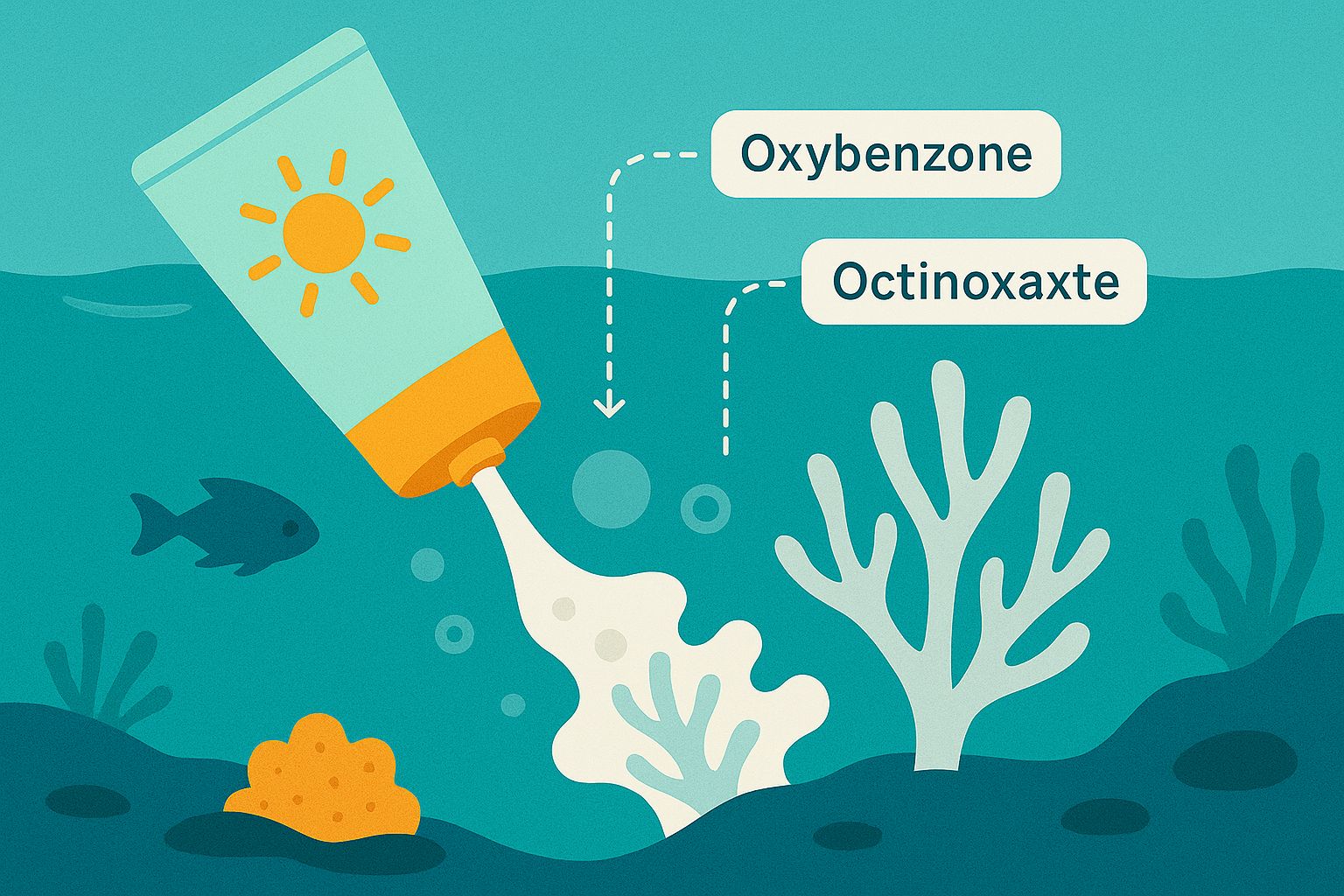
How sunscreen enters our waterways
It's not just beach-goers. Anyone who wears sunscreen contributes to the problem — the chemicals don't disappear when they go down the drain.
Chemicals that harm marine life
Research has identified at least 10 sunscreen chemicals that damage coral reefs and marine ecosystems. Here are the ones you need to watch for on ingredient labels.
How marine life is affected
Sunscreen Chemicals and Marine Life
Tap the infographic to view it full size
Source: NOAA — oceanservice.noaa.gov/sunscreen
Small choices. Big impact.
You don't have to stop wearing sunscreen. You just need to choose the right one — and combine it with smarter sun protection habits.

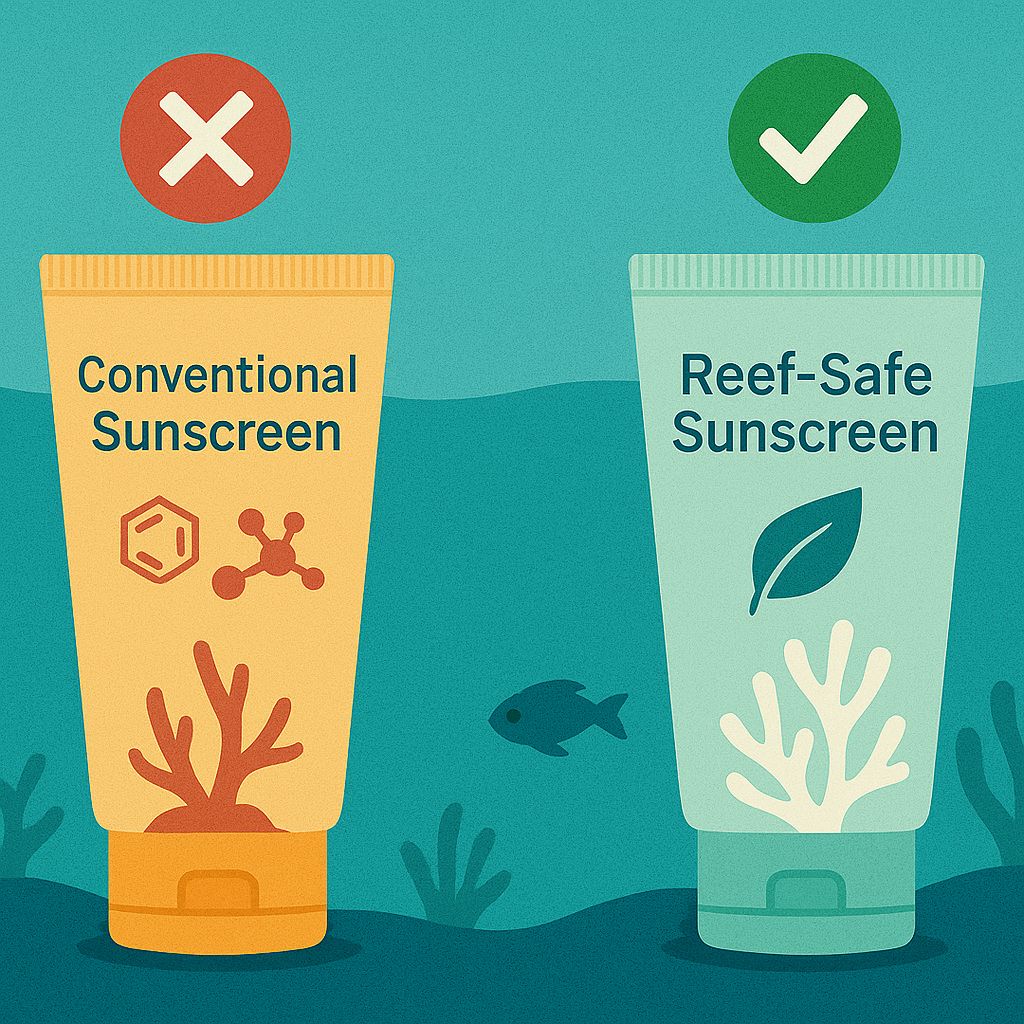
Learn. Share. Protect.
In-depth articles about sunscreen science, reef-safe alternatives, and how every Australian can help.
How Sunscreen Chemicals Damage Coral Reefs
Oxybenzone and octinoxate are found in over 3,500 sunscreen products worldwide. Here's exactly how they cause coral bleaching, DNA damage, and reef death.
The Australian Guide to Reef-Safe Sunscreen
"Reef-safe" isn't a regulated term in Australia. Learn how to read ingredient labels and find sunscreens that truly protect both your skin and our reefs.
Your Shower Is Harming the Reef — Here's How
You don't need to be at the beach to contribute to reef damage. Sunscreen chemicals wash down the drain, enter wastewater, and reach our oceans.